How to Identify and Fix Cannabis Nutrient Deficiencies [Complete Visual Guide 2025]
Nothing is more frustrating than watching your cannabis plants develop strange discoloration, wilting, or stunted growth. These symptoms usually point to nutrient deficiencies - one of the most common problems facing both new and experienced growers.
This comprehensive guide will teach you how to identify each major nutrient deficiency, understand what's causing it, and fix it before it impacts your yield.
---
Understanding Cannabis Nutrition Basics
Cannabis plants require 17 essential nutrients to thrive. These are divided into three categories:
Macronutrients (needed in large quantities):
- Nitrogen (N)
- Phosphorus (P)
- Potassium (K)
- Calcium (Ca)
- Magnesium (Mg)
- Sulfur (S)
Secondary Nutrients:
- Calcium, Magnesium, and Sulfur
Micronutrients (needed in trace amounts):
- Iron (Fe)
- Manganese (Mn)
- Boron (B)
- Zinc (Zn)
- Copper (Cu)
- Molybdenum (Mo)
- Chlorine (Cl)
The "NPK" ratio you see on fertilizer bottles represents the three primary macronutrients: Nitrogen, Phosphorus, and Potassium.
---
Mobile vs. Immobile Nutrients: Why It Matters
Understanding nutrient mobility helps you diagnose where deficiencies will appear:
Mobile Nutrients (plant can move them from older to newer growth):
- Nitrogen (N)
- Phosphorus (P)
- Potassium (K)
- Magnesium (Mg)
- Molybdenum (Mo)
Deficiencies appear in older, lower leaves first.
Immobile Nutrients (cannot be relocated once stored):
- Calcium (Ca)
- Sulfur (S)
- Iron (Fe)
- Manganese (Mn)
- Boron (B)
- Zinc (Zn)
- Copper (Cu)
Deficiencies appear in newer, upper growth first.
---
Nitrogen (N) Deficiency
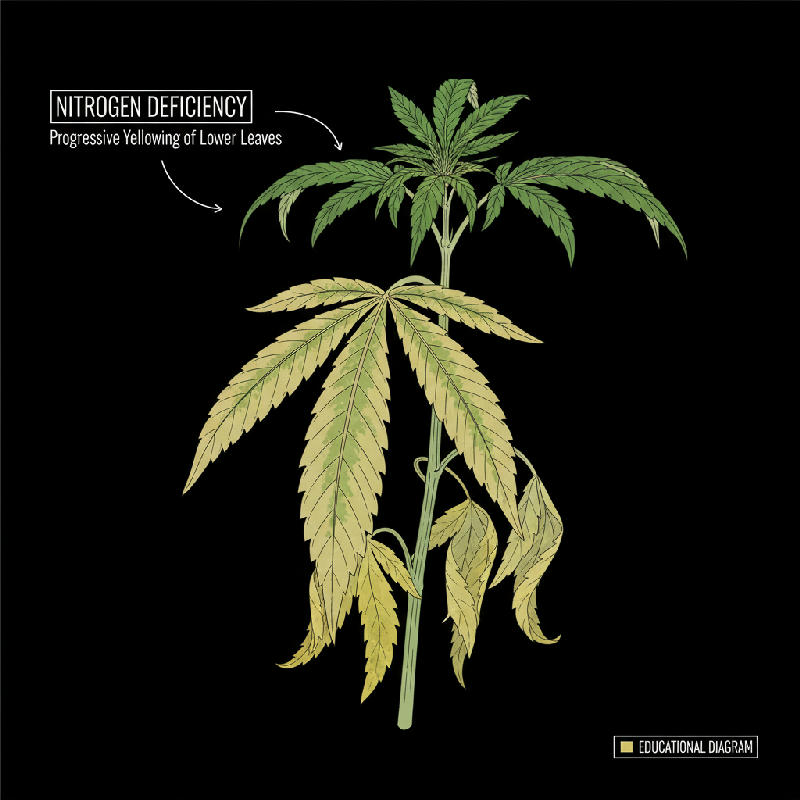
What to Look For:
- Older, lower leaves turn pale green, then yellow
- Yellowing progresses from bottom to top
- Leaves may drop off
- Stunted growth
- Weak, thin stems
Causes:
- Low nitrogen in soil
- Incorrect pH (nitrogen unavailable)
- Overwatering (washes away nitrogen)
- Late flowering stage (natural nitrogen decline)
How to Fix:
- Apply nitrogen-rich fertilizer (higher first number in NPK)
- Use fish emulsion or blood meal for organic grows
- Check and adjust pH to 6.0-7.0 (soil) or 5.5-6.5 (hydro)
- Ensure proper watering schedule
Prevention:
- Use quality base nutrients with adequate nitrogen
- Monitor pH regularly
- Don't overfeed in late flower (some yellowing is normal)
---
Phosphorus (P) Deficiency
!Phosphorus Deficiency Symptoms
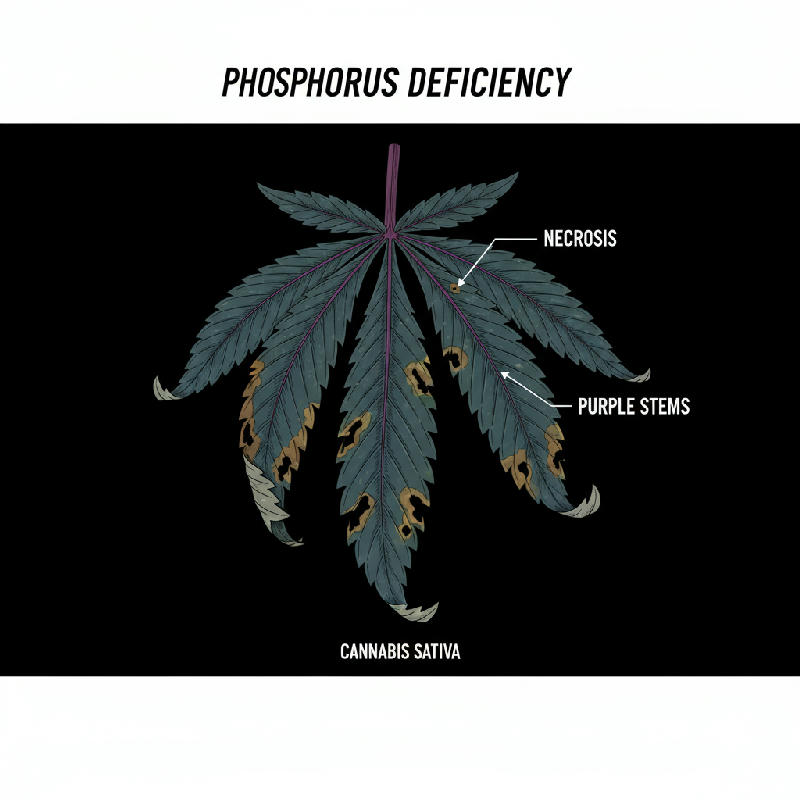
What to Look For:
- Dark green or blue-green leaves
- Purple or red stems and leaf stems
- Lower leaves develop brown spots
- Leaves may curl downward
- Slow growth and delayed flowering
Causes:
- Low phosphorus in growing medium
- pH too high or too low (P lockout)
- Cold temperatures (below 60°F)
- Overwatering
How to Fix:
- Apply phosphorus-rich bloom fertilizer
- Use bone meal for organic grows
- Adjust pH to optimal range
- Increase temperature if growing in cold conditions
- Reduce watering frequency
Prevention:
- Use bloom boosters during flowering
- Maintain stable temperatures above 65°F
- Keep pH in optimal range
---
Potassium (K) Deficiency
!Potassium Deficiency Symptoms
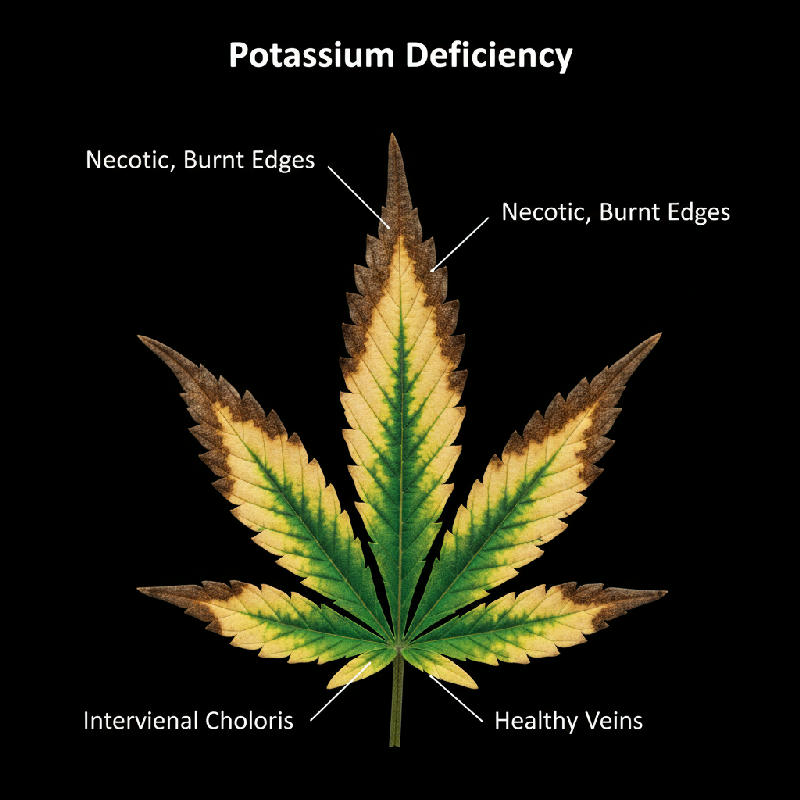
What to Look For:
- Brown, burnt-looking edges on leaves (necrosis)
- Yellowing between leaf veins
- Leaf tips curl up or down
- Stretching between nodes
- Weak stems, poor bud development
Causes:
- Low potassium in medium
- pH imbalance (K lockout)
- Excess calcium or nitrogen (interferes with K uptake)
- Poor root health
How to Fix:
- Apply potassium-rich fertilizer (higher third number in NPK)
- Use kelp meal or wood ash for organic grows
- Check and correct pH
- Reduce calcium and nitrogen if excessive
- Flush if salt buildup is suspected
Prevention:
- Use quality bloom nutrients with adequate potassium
- Monitor EC/PPM to avoid nutrient buildup
- Regular pH testing
---
Calcium (Ca) Deficiency
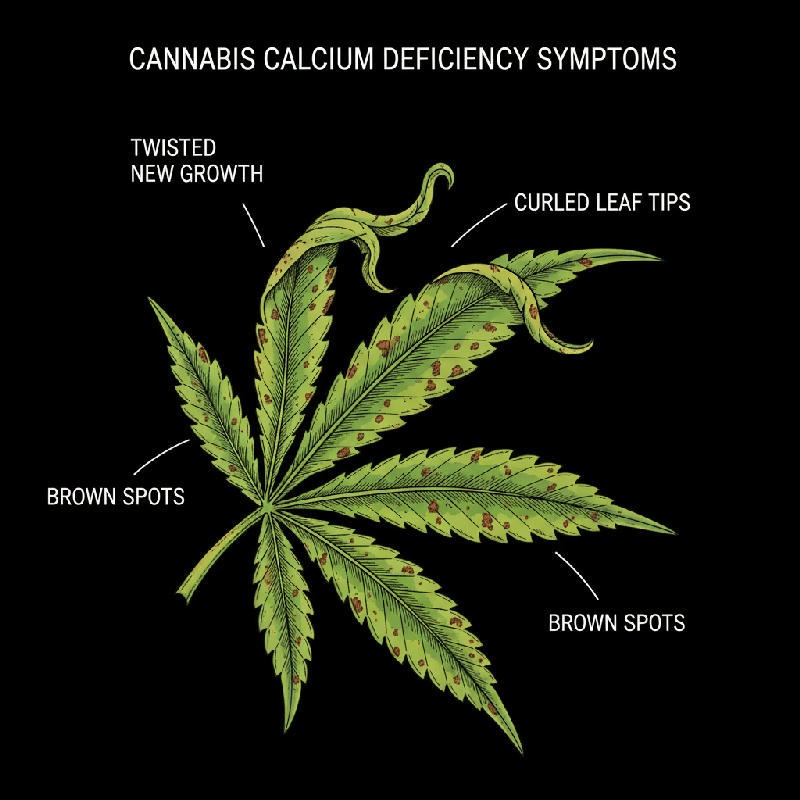
What to Look For:
- New growth appears twisted, crinkled, or distorted
- Brown spots on new leaves
- Slow growth
- Weak, hollow stems
- Blossom end rot (rare in cannabis but possible)
Causes:
- Low calcium in medium
- Low pH (calcium unavailable)
- High humidity (reduces transpiration)
- Inconsistent watering
How to Fix:
- Add calcium supplements (CalMag)
- Use dolomite lime for soil grows
- Raise pH if too acidic
- Improve air circulation to increase transpiration
- Water more consistently
Prevention:
- Use CalMag supplements preventatively
- Maintain proper pH
- Ensure adequate airflow
- Don't let medium dry out completely
---
Magnesium (Mg) Deficiency
!Magnesium Deficiency Symptoms
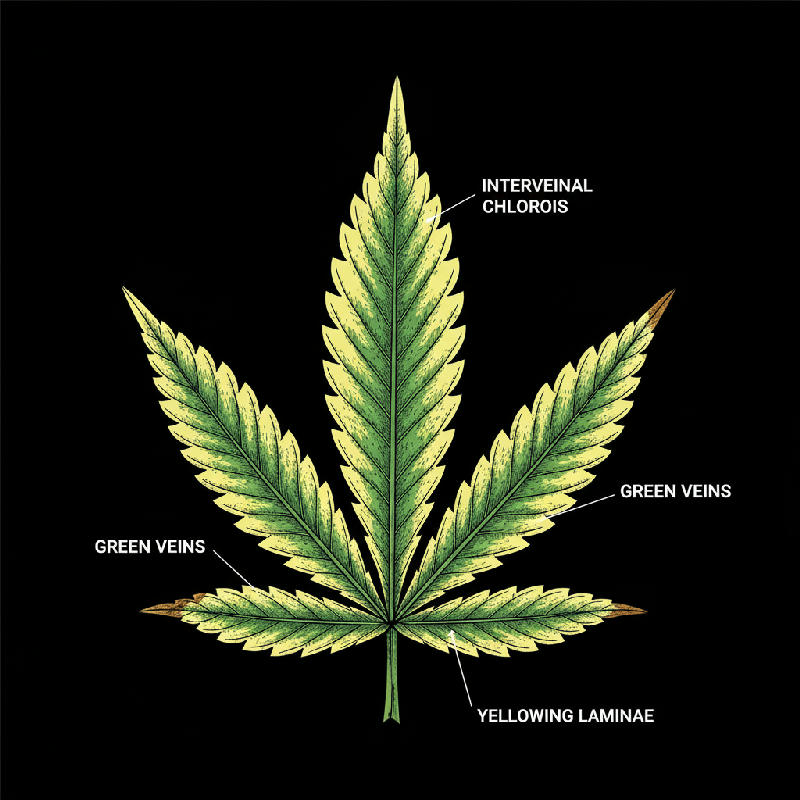
What to Look For:
- Yellowing between leaf veins (veins stay green)
- Starts on lower, older leaves
- Leaf edges may curl up
- Brown spots may develop
- Orange or red discoloration
Causes:
- Low magnesium in medium
- Low pH (Mg lockout)
- Excess calcium or potassium (interferes with Mg)
- Using RO water without supplementation
How to Fix:
- Apply Epsom salts (magnesium sulfate) - 1 tsp per gallon
- Use CalMag products
- Adjust pH to optimal range
- Reduce calcium/potassium if excessive
Prevention:
- Use CalMag with RO or filtered water
- Maintain proper pH
- Don't overfeed calcium
---
Iron (Fe) Deficiency
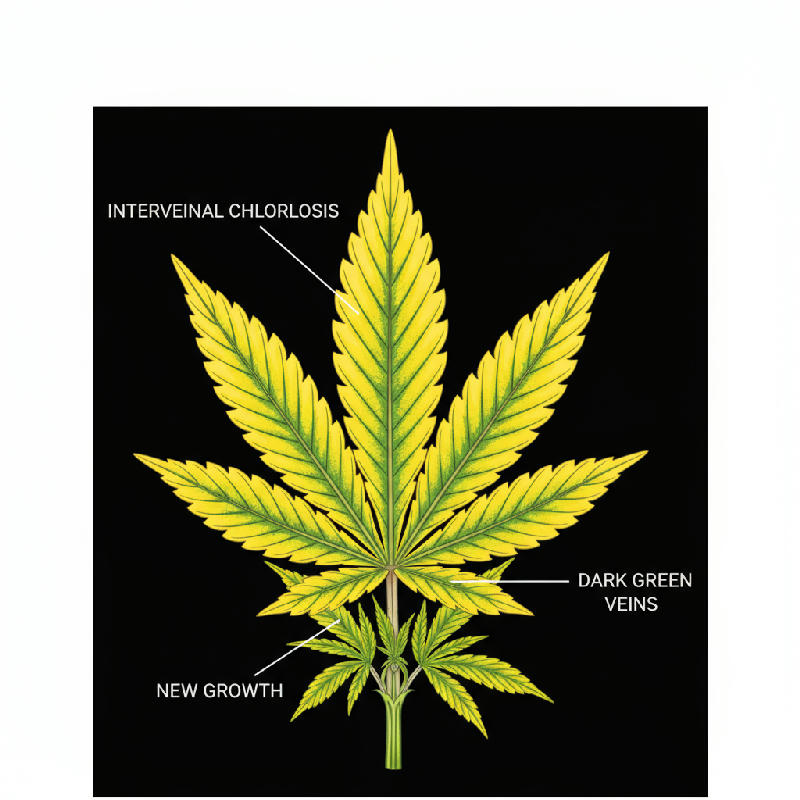
What to Look For:
- New growth turns yellow while veins stay green
- Severe cases: entire new leaves turn white or yellow
- Growth slows significantly
- Affects upper, newer leaves first
Causes:
- pH too high (most common cause of Fe lockout)
- Poor root health
- Overwatering
- Excess phosphorus
How to Fix:
- Lower pH immediately (most effective solution)
- Apply chelated iron supplement
- Improve drainage
- Check root health for rot
Prevention:
- Keep pH in optimal range (especially important for Fe)
- Don't overfeed phosphorus
- Maintain healthy root zone
---
Zinc (Zn) Deficiency
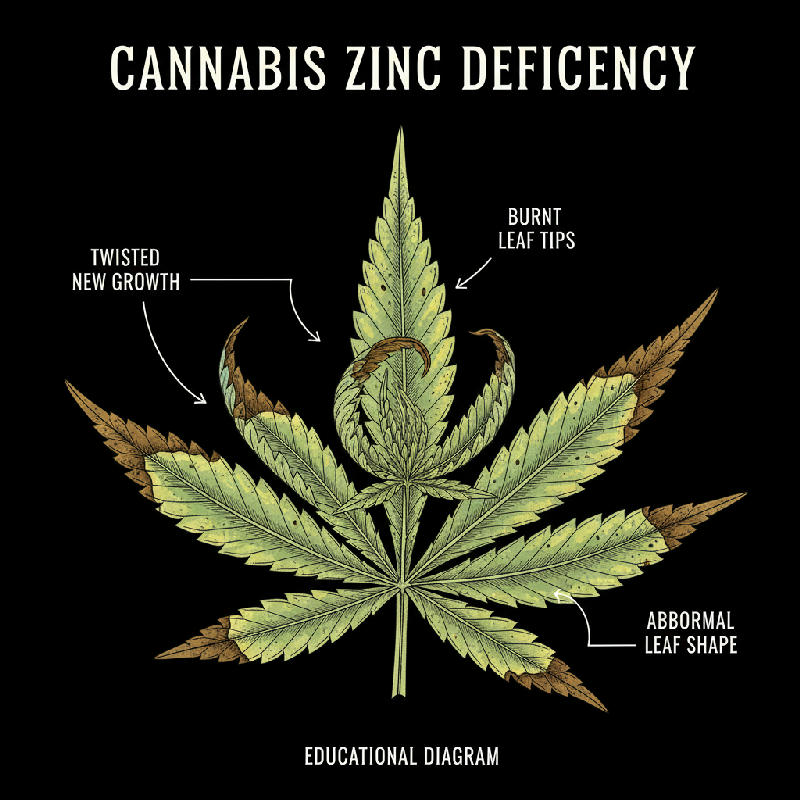
What to Look For:
- New leaves small and twisted
- Yellowing between veins on new growth
- Short internodes
- Brown tips on leaves
Causes:
- High pH (most common)
- Excess phosphorus
- Poor quality water
How to Fix:
- Lower pH to 6.0-6.5
- Apply zinc supplement (use sparingly)
- Reduce phosphorus levels
- Flush to remove salt buildup
Prevention:
- Maintain optimal pH
- Don't over-apply bloom boosters high in P
---
Manganese (Mn) Deficiency
!Manganese Deficiency Symptoms
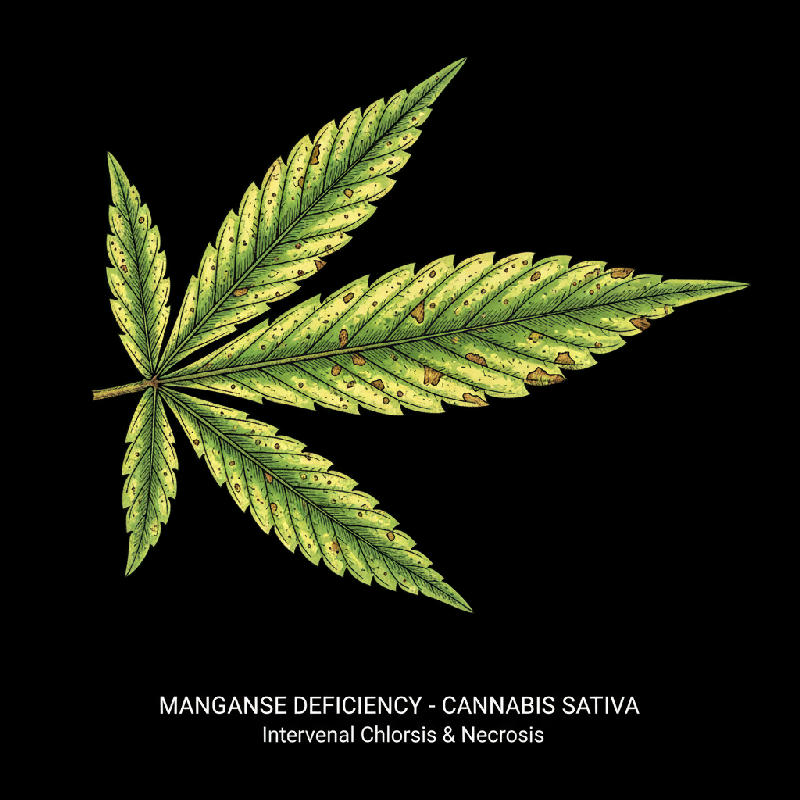
What to Look For:
- Interveinal chlorosis on new growth
- Similar to iron deficiency but less severe
- Brown spots may develop
- Dead spots between veins
Causes:
- High pH
- Excess iron in medium
- Poor aeration
How to Fix:
- Lower pH
- Improve soil aeration
- Apply manganese sulfate (rare - usually pH is the issue)
Prevention:
- Keep pH in proper range
- Ensure good drainage and aeration
---
pH and Nutrient Lockout: The Hidden Problem
Many nutrient deficiencies aren't caused by lack of nutrients - they're caused by nutrient lockout due to incorrect pH.
Optimal pH Ranges:
- Soil: 6.0 - 7.0
- Hydroponics/Soilless: 5.5 - 6.5
- Coco Coir: 5.8 - 6.3
When pH is outside these ranges, certain nutrients become chemically unavailable to the plant even though they're present in the medium.
pH Too Low (Acidic):
- Lockout: Phosphorus, Calcium, Magnesium
- Available: Iron, Manganese, Zinc
pH Too High (Alkaline):
- Lockout: Iron, Manganese, Zinc, Phosphorus
- Available: Calcium, Magnesium
The Solution: Always check and adjust pH before assuming you need to add more nutrients.
---
When to Flush vs. When to Feed
Flush When:
- You see signs of nutrient burn (dark green, clawing, burnt tips)
- EC/PPM readings are excessively high
- Salt buildup is visible on medium or container
- You've been overfeeding
- Before fixing a deficiency that might be lockout
Feed When:
- Plant shows clear deficiency symptoms
- EC/PPM readings are low
- You've been underfeeding
- After flushing (give light feed)
How to Flush:
- Use pH-adjusted water (3x the container volume)
- Let drain completely
- Wait 1-2 days, then resume feeding at half strength
---
Common Mistakes When Treating Deficiencies
1. Overreacting and Overfeeding
- More nutrients aren't always the answer
- Check pH first
- Start with half-strength corrections
2. Misdiagnosing the Problem
- Multiple deficiencies can look similar
- Use process of elimination
- Consider what you're already feeding
3. Expecting Instant Results
- Damaged leaves won't fully recover
- Look for improvement in new growth
- Give corrections 5-7 days to work
4. Not Testing Runoff
- Runoff pH and EC tell the real story
- Test input and output
- Adjust based on runoff readings
5. Ignoring Environmental Factors
- Temperature affects nutrient uptake
- Humidity affects transpiration
- Light intensity affects nutrient needs
For a whole-plant approach to spotting issues — not just nutrients — pair this with reading your cannabis plant visually.
---
Organic vs. Synthetic Solutions
Synthetic (Mineral) Nutrients:
- Fast-acting, immediately available
- Precise NPK ratios
- Easier to correct deficiencies quickly
- Risk of overfeeding and salt buildup
- Examples: General Hydroponics, Fox Farm Trio
Organic Amendments:
- Slow-release, need microbial breakdown
- More forgiving, less risk of overfeeding
- Improve soil health long-term
- Take longer to correct deficiencies
- Examples: Compost, kelp meal, bone meal, fish emulsion
Best Approach:
- Synthetic for quick fixes in hydro/soilless
- Organic for soil builds and long-term health
- Can combine both for living soil with synthetic supplements
---
Using StrainTrakker to Prevent Deficiencies
Track your feeding schedule and plant health to spot patterns before deficiencies become severe:
Document:
- NPK ratios used at each stage
- pH and EC readings
- When deficiencies appeared
- What fixed them
- Plant response to corrections
Learn:
- Which strains are heavy feeders
- Your specific water's pH and PPM
- Optimal feeding schedules for your setup
- Early warning signs
Optimize:
- Replicate what works
- Catch problems earlier each grow
- Fine-tune your nutrient program
Start your free grow journal and never forget what worked (or what didn't).
---
Quick Reference Chart
| Nutrient | Deficiency Shows On | Key Symptom | Quick Fix |
|----------|-------------------|-------------|-----------|
| Nitrogen | Old leaves | Yellow leaves, bottom up | N-rich feed |
| Phosphorus | Old leaves | Purple stems, dark leaves | P-rich bloom food |
| Potassium | Old leaves | Burnt edges | K-rich bloom food |
| Calcium | New leaves | Twisted, distorted growth | CalMag |
| Magnesium | Old leaves | Yellow between veins | Epsom salts |
| Iron | New leaves | Yellow leaves, green veins | Lower pH |
| Zinc | New leaves | Small twisted leaves | Lower pH |
| Manganese | New leaves | Spots between veins | Lower pH |
---
Conclusion: Prevention is Easier Than Cure
The best way to handle nutrient deficiencies is to prevent them:
✅ Use quality, complete base nutrients
✅ Test and adjust pH every feeding
✅ Monitor EC/PPM to avoid buildup
✅ Don't overfeed (less is often more)
✅ Maintain proper environment (temp, humidity)
✅ Keep detailed records with StrainTrakker
✅ Act fast when you spot early symptoms
Remember: Healthy plants start with healthy roots, proper pH, and balanced nutrition. Master these basics, and you'll rarely face severe deficiency issues.
---
Track your nutrient schedule, pH readings, and plant health with StrainTrakker. Document what works for each strain so you can prevent deficiencies before they start. Start your free grow journal today.
Multiple simultaneous deficiency symptoms almost always mean pH lockout, not multiple missing nutrients — the pH imbalance treatment guide walks through the availability-curve diagnostic before you touch the feed schedule.